
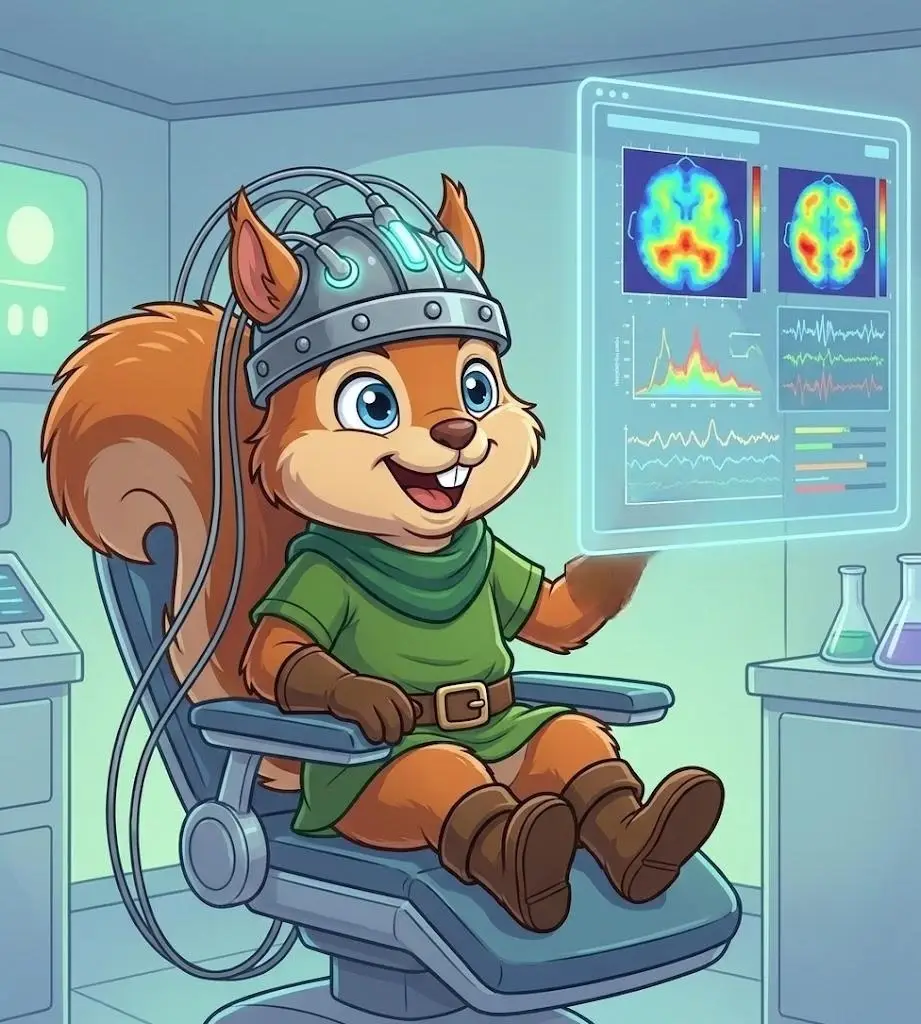
Learning the way the brain learns
Mitosk's pedagogical design is grounded in decades of cognitive neuroscience research. The mechanisms that consolidate knowledge long-term are well understood: active retrieval, spacing and interleaving. Mitosk implements them systematically, not as optional add-ons.
Published evidence
Galindo-Melero et al. (2025) showed in a controlled trial with university students that combining spaced repetition with active retrieval exercises produces 30-day retention 42 % higher than traditional re-reading.
The meta-analysis by Lampropoulos (2024) covering 78 gamification studies confirms that environments with immediate feedback loops activate prefrontal regions associated with deep processing, which correlates with knowledge transfer to new contexts.
Evidence-based design
Every exercise type in Mitosk maps to the literature: flashcards optimise the hippocampal cycle; multiple-choice with justification activates the lateral prefrontal cortex; concept-association questions reinforce semantic networks in the neocortex.
The result is an app that doesn't just feel effective — it is: learning integrates into long-term memory, available when you need it.